
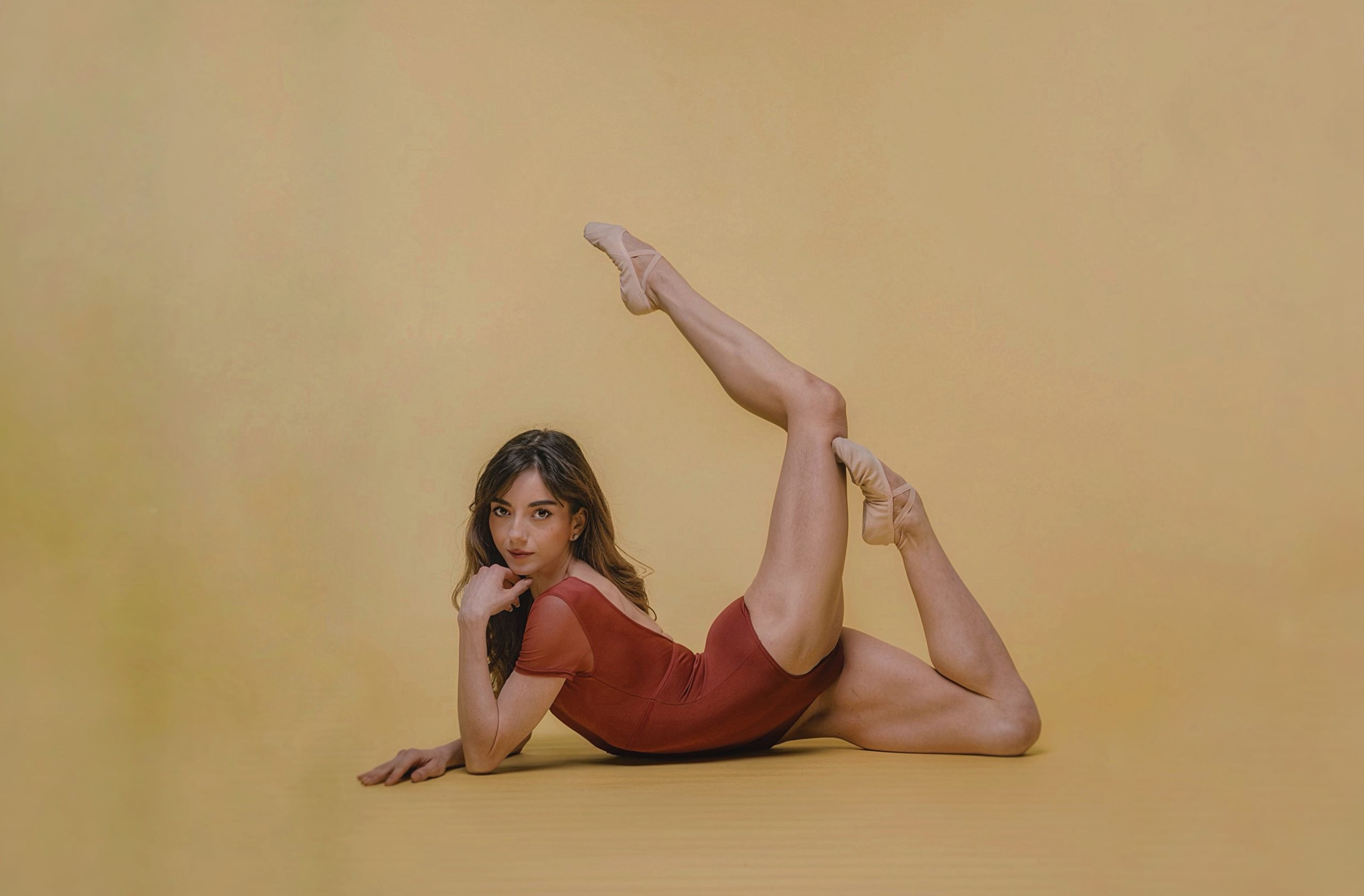
AYÇA ANIL
'I was being cast in lead roles, and that's when I quit dancing completely.'

Editor's note: This interview was recorded in October 2025. Ayça Anil discusses an injury and recovery phase that reflects her situation at the time of recording and not her current condition.
Ayça Anil is a professional ballerina, movement educator, and the creator of the Bodhi Core Method, a science-based training platform developed for dancers and adaptable to all movers. A First Class Honours graduate in Professional Dance and Performance from University of Kent, she became the first professional Turkish ballerina to join the Northern Ballet and currently dances with the Istanbul State Opera and Ballet. Drawing on a lifelong practice of ballet, yoga, and Pilates, her work integrates fascia training and nervous system regulation to support sustainable performance, injury prevention, and long-term resilience.
What is the hardest part of being a ballerina?
I think it's the identity issues and trying to fit into the ballet aesthetic, both physically and mentally. Dancers are expected to stay in peak form, remain injury-free, and recover very quickly, yet there isn't enough education or awareness around what dancers actually need to sustain that level without getting injured.
There's also a lack of awareness within the dance community, as well as limited resources, which creates a huge challenge. On top of that, dancers often tie their self-worth to their performance or how they look, and even to the applause they receive. So it becomes about finding self-worth, alongside managing the intense physical demands of the art form.

Can you share your background and ballet training?
I started dancing when I was about five. Ballet was compulsory at my kindergarten, which is quite unusual, but because I was naturally very hypermobile, I stood out and quickly fell in love with dancing. I asked my mum to take me to ballet classes, and that's really how it all began. I later trained at the Ballet Conservatory in Istanbul, and at around twelve and a half I was accepted into the John Cranko Ballet School, where I moved abroad on my own and studied for about six years.
I entered the academy level, which is the highest form of training, similar to university. However, because I was short, I was told I wouldn't find work in Germany, and the director advised me to move to the UK, where there were more dancers with my body type. I transferred to a school in London and, funnily enough, was offered a job before any of my classmates. I was about seventeen and a half, still studying, and never even auditioned—the director watched a class and offered me a contract. After touring with the company, though, I burned out very quickly. I was living in a boarding ballet school with a difficult environment, and at twenty-one, just as I was being cast in lead roles, I quit dancing completely. I told myself I wouldn't return unless I was in a better place mentally and physically, and I cut ties with ballet entirely.
What led you to make the decision to step away from dancing?
Nothing big really pushed me to the limit. It was more gradual, and everything I had experienced in the dance world since I was twelve came together and made me question why I was doing it, and whether it was worth putting my health and wellbeing at risk. I wasn't in a good place mentally or physically. I was very burned out, unhappy, and underfeeding myself because I thought that was what I was supposed to do.
I realised that when I was underweight, I lost my jumps, which were one of my biggest strengths. I also lost my ability to pick up choreography quickly and became emotionally unstable. It reached a point where I knew I couldn't go on living like that, as it wasn't helping my performance or my wellbeing in any way. I needed time away from dance to gain perspective and heal my relationship with myself, with food, and with movement. During that time, I trained in Pilates, yoga, mindfulness, and later studied sports science to better understand the body, performance, and psychology. Once I was in a healthier place, I realised I could return to dancing without harming myself or being unhappy, and that's when I chose to go back.

You're currently dancing with the Istanbul State Opera and Ballet. Could you share what happened with your recent injury?
Even when you do everything right, recover properly, eat well, and take care of yourself, injuries can still happen because ballet is very anatomically destructive. In my case, the injury wasn't gradual. My partner unintentionally dropped me off my axis onto pointe, which caused my ankle to sprain. At first, I didn't think it was that severe and felt I could still do Act Two. Although I sat down on the floor in pain, the music didn't stop and I was told to get up and finish the rehearsal. I said I just wanted to check if my ankle was okay, but I was told that if this happened on stage, I would have to get up and carry on.
Unfortunately, I think this is quite common, especially if you're a newer dancer in the company. What was worse is that once the run-through was over, I had to go and apologise to every teacher and director who was watching for stopping and pausing. I then went on to perform two shows in a row over the next two days.
How was the process of realising you needed surgery after the accident?
It turned out that my ligament had torn, and as it tore, it pulled a piece of bone with it. That left a loose bone fragment, which also attached itself to another ligament in my big toe and caused ongoing pain. At the time, I kept going mainly because of adrenaline and because I felt I didn't really have a choice. I believed that not pushing through pain would lead to consequences, and I didn't feel supported enough to prioritise my health and wellbeing.
I didn't want surgery unless it was absolutely necessary, because when fascia is cut, sensory feedback becomes disrupted and it loses some of its continuity. It's like interrupting a language the body speaks instinctively, and it alters the whole system. I saw six doctors, and they all said the same thing: the bone fragment had to be removed. Without surgery, I could walk and function, but I couldn't go on pointe. I gave myself time to grieve, and then I asked how I could turn the experience into something positive. That process ultimately led me to focus on supporting injured dancers who don't have access to appropriate exercises or methods they can use while injured, especially without weight-bearing, which is what I'm working on now.

How is the recovery process going, especially at a psychological level?
Because I've had a previous break from dancing, this time I didn't have a big problem with taking time off. At first, I felt anxious and nervous, but now I feel okay. It doesn't define me. My performance doesn't define who I am or my worth, and I feel more in tune with my body than before. For me, it was actually a good sign to pause and reflect on my priorities and my boundaries.
I really believe that life happens, but what defines the experience is our perspective and how we respond. I kept asking myself how something that seems so negative, like an injury, could become a space for growth, or even a gift. During recovery, I went into deep research on what can help dancers, athletes, or anyone recover faster. I explored breathing methods and different techniques and tested them on my own body, which really helped. Of course, I can't say that my foot is completely healed, but medically speaking, it's healing about twenty-five per cent faster than expected. For me, this period became more like research time, with the goal of turning this experience into something that can help others going through the same process.
What breathing techniques have you found most helpful for recovery?
I discovered that one of the most effective breathing methods for recovery is box breathing. It's very simple but very effective. For recovery to happen, you need to be in a good place mentally and physically, and your nervous system needs to be in a state where it can heal, restore, and repair. Box breathing really supports that. Another technique, which might sound strange to dancers, is humming. Humming increases nitric oxide, which helps with tissue repair and collagen synthesis, and I found it to be incredibly helpful.
I was trying to find ways to reduce inflammation, and after practising these methods, especially humming, I noticed the swelling reduced much faster and my nervous system felt much calmer. When I looked into it further, I realised this is supported by scientific evidence. I also explored lymphatic drainage breathing techniques that involve breath holding, which can help with reducing waste and toxins. This made me realise that recovery isn't passive at all. It's a lot of work, especially because we create micro-damage in our bodies every day. Athletes train in curves, with clear peak performance structures built into their schedules, and I realised my body needs more recovery time than ballet usually allows. I hope ballet training can eventually shift towards a more science-based, evidence-led structure, similar to how athletes train.

If dancers had fewer classes or less training during the day, do you think they would still train at night at home?
I really hope not, but this is the culture that needs a bit of shifting and a bit of perspective. Dancers keep quoting icons like Baryshnikov, who said, 'If you miss class one day, you will know. If you miss two classes, your teacher will know. If you miss three classes in a row, the entire audience will know.' That's kind of the mantra of all dancers, and I think it fuels the anxiety around recovery. That's why I think education is really important for dancers and athletes, because they need to understand that the human body doesn't just work that way.
You can take two days off and you're not going to die, you will actually come back stronger and better. If you say this to a scientist or a sports nutritionist, it's obvious, but it's so hard to convince dancers because they've been programmed this way since childhood. They've been told over and over that you can't take time off, you can't live a normal life, and you need to sacrifice yourself every single day. We've seen how that plays out. Everyone I know who really sacrifices themselves and doesn't take care of their bodies ends up injured and unhappy, and so many struggle with depression when they quit. Just looking at the data, we can see something isn't right, and it's time for that to change.
What do you think dancers misunderstand about pain, fatigue, and what the body is actually experiencing?
It's not just muscular fatigue. There's also neurological fatigue, which affects coordination, balance, reaction time, and emotional and systemic fatigue caused by chronic stress, pressure, and a lack of mental and physical recovery. Almost every dancer I meet is hyper-vigilant, so their nervous system never really calms down, at least not intentionally or regularly. That has a huge impact on how the body recovers and how tissues repair, and it affects how dancers live their lives.
I relate to this personally because I'm very hypermobile, and not in a good way. I have genu varum, so my knees are naturally internally rotated and sway back, which is the opposite of what dancers want. When I was young, I was told it was severe and that I'd have problems walking later in life. Ballet actually saved me in a way, because I developed a lot of strength, and that strength protected me. But it also meant I had to work twice as hard. I used to be in extreme discomfort, sweating heavily even in pliés, trying to force external rotation, and I told myself that ballet was supposed to be painful. Only later did I realise that this level of constant discomfort isn't natural, even for dancers. It made me understand that while discipline matters, we also have to honour our individual anatomy, because that much pain isn't something the body is designed to tolerate indefinitely.

Can you explain the different types of fatigue, which ones dancers are most prone to, and how these can be counteracted in practice?
Generally speaking, there are three main types of fatigue: muscular, neurological, and mental, emotional, or systemic fatigue. Muscular fatigue comes from local tissue overload, when muscles feel sore, heavy, and need physical recovery, circulation, and rest. When I tune into my body and feel this type of fatigue, I usually respond with gentle movement, proper nutrition, and supportive supplements such as magnesium, omega-3s, or collagen. These can make a noticeable difference in how muscles recover, depending on the day and the demands placed on the body.
The second type is neurological fatigue, which affects memory, brain fog, coordination, balance, and reaction time. This is especially critical for dancers, particularly during partnering, where awareness and timing are essential. Neurological fatigue often comes from an overstimulated nervous system, and recovery here requires downregulation through breathwork and, most importantly, sleep. Not just sleep, but quality sleep, which many dancers struggle to get. I've found that magnesium can be particularly helpful in supporting that process.
I also like to get regular blood tests, usually every four months, because I take supplements and want to know whether my body actually needs that much. There have been times when I wasn't taking anything at all, and blood work showed that my vitamin D levels were extremely low. I think testing should be done regularly and, just as importantly, people should be educated on what the results mean. It sounds complicated, but it really isn't, and being informed makes a huge difference in how effectively you support recovery.
Can you explain what Bodhi Core training is, and clarify concepts like fascia, joint decompression, and neural mobility?
Bodhi Core is essentially a holistic movement platform where science meets mindful movement. What I do is combine fascia training, joint decompression, neural mobility, and neuromuscular reprogramming with different methods such as Pilates, mobility work, barre fitness, yoga, breathwork, and mindfulness. In my classes, I mainly use spiral, multi-dimensional movements and conscious breathing patterns to release tension while moving, create space in the joints, rehydrate the fascia, and retrain how the mind and body communicate.
I also make sure there's variety, because the body doesn't need the same thing every day. Sometimes it needs to slow down, and other times it needs more power or more dynamic work. Not every day needs to be one hundred per cent effort. I really try to encourage people to listen to their bodies and what they need on that particular day. What Bodhi Core does is bring science and artistry together. I saw a big gap in how dancers, people in traditional fitness, and everyday movers are trained. Strength training is important, and flexibility work is important, but I often see programmes that focus on just one area. I truly believe that transformation happens when these elements are integrated. Pilates builds strength, yoga brings awareness and flexibility, barre refines alignment, and fascia work restores flow and glide. When combined, they create balance, connection, and longevity, training not just the muscles but also the nervous system, so people can move more intelligently and in harmony with their bodies, without breaking them down.

Could you provide more details on fascia training?
Fascia and the nervous system are essentially the body's communication network. They determine how efficiently we move, recover, and adapt to stress. Without addressing fascial health and the nervous system, the body can't fully integrate strength, flexibility, and control, especially because fascia transfers force faster than muscles. The body also keeps score. Every experience, emotion, and repetitive pattern leaves an imprint in the tissues. Sometimes the tension we hold isn't just physical, but emotional or protective, especially after injury, and that gets stored in the fascia and reflected in how we move. When we train fascia and regulate the nervous system, we restore elasticity and glide, release stored tension, and allow the body to feel more connected, in tune, and capable of performing at its best.
When I talk about rehydrating fascia, I mean restoring fluid movement and glide between the layers of connective tissue. Fascia isn't just something that wraps around muscles or organs; it's a living, dynamic network that depends on pressure, movement, and elasticity, much like a sponge that needs to be squeezed and released to function well. In practice, this means using spiral, multi-directional movements that gently compress and release different areas of the body, allowing fresh fluid and nutrients to circulate. This improves the fascia's ability to transfer force efficiently, so energy moves seamlessly through the body. I often explain this through the sling system, which helps visualise how force transfers across connections, for example from the inner thigh to the opposite oblique. When this system works well, movement requires less effort and more control, allowing us to move fluidly rather than relying on brute strength.
Many people, especially in the yoga community, talk about bouncing or swinging movements as being good for fascia. What's your perspective on that?
I think there are different ways to address fascia, depending on the method and the body. Bouncing and moving in spirals can be beneficial a lot of the time, but it doesn't need to be the only way to work with fascia or to hydrate fascia. Static stretching isn't very helpful for fascia, especially if you're hypermobile. For someone like me, my fascia is already compromised and not moving efficiently, so long static stretches, such as yin yoga, can actually be harmful. I say this even though I'm a yin yoga teacher myself. It can be great for someone else, but it's not right for my body.
For people with hypermobility or very large ranges of motion, it's usually better to work with gentle glides and spirals. Bouncing can still be effective for some bodies and some body types, but not for everyone. That's why becoming more in tune with the body is really important, understanding what feels good, what feels challenging but comfortable, and what doesn't serve you. Through my research, I also learned from Dr. Edythe Heus, a fascia expert who has worked with Olympic athletes and principal dancers for over twenty years. I'm working on a recovery course for dancers, and she's also going to be featured in that. It won't just be my classes. It will also be her fascia classes integrated in, which I'm really excited about.

What do you think are the main causes of anxiety in dancers, and how can they be addressed?
There are many, but some of the biggest ones are pressure around body image, job insecurity, and financial insecurity. More recently, social media comparison has become a major source of anxiety for dancers. The constant need to look perfect, both on stage and online, creates chronic stress in the body and the nervous system.
There's also the uncertainty of the career itself. You can get injured at any time, and that instability, combined with tying your self-worth to your job and performance, creates a huge emotional strain. When your value is linked to how you perform or how you look, it becomes extremely toxic.
What's next for you and for Bodhi Core?
Creatively and educationally, I'd say expansion. I want to keep building Bodhi Core into a global platform that bridges science, movement, and mindfulness for dancers and athletes. My hope is that this approach brings more awareness into dancers' daily lives and how they relate to their bodies. If my classes or Bodhi Core can inspire even one person to build a better relationship with their body, I would be very happy with that.
Looking ahead, I'd love to develop new programmes focused on recovery, performance, and nervous system training, and to collaborate with more experts, like Dr. Edythe Heus. We're also launching our app soon, which I'm really excited about. Ultimately, my vision is for Bodhi Core to be more than just a training method, to become a community and a movement philosophy that supports longevity, artistry, and holistic wellbeing.
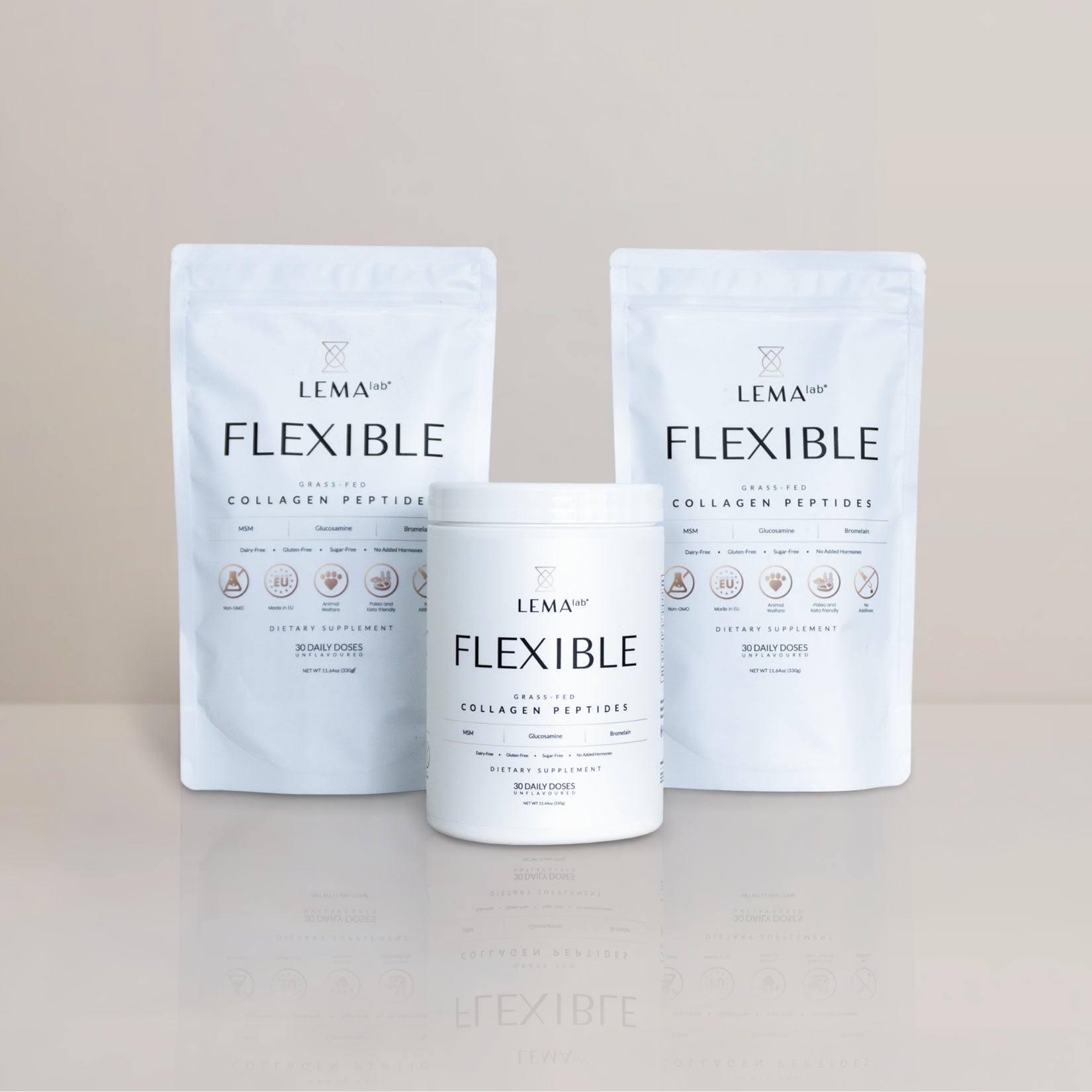
*This interview was originally featured on the Flexi Podcast, the LEMAlab® podcast hosted by Erika Lemay. The full episode is available on Spotify and YouTube.






Leave a comment
This site is protected by hCaptcha and the hCaptcha Privacy Policy and Terms of Service apply.